

How To Choose The Right Dog Seat Belt Tethers 2026
As a holistic veterinarian, I spend a lot of time talking about nutrition and joint support, but I cannot stress enough how vital physical safety is to your dog’s overall well-being. A loose dog in a moving vehicle is not just a distraction; they are a projectile waiting to happen, and the sudden deceleration of a car can cause severe internal trauma or spinal injury that no amount of supplements can fix. Choosing the right restraint system is one of the most important preventative health measures you can take, ensuring that your furry family member arrives as safe and sound as they left.
Quick Answer
The safest option is a crash-tested harness attached to the vehicle’s seat belt buckle via a short, crash-tested tether. Avoid long leashes that allow your dog to swing forward during sudden stops, as this creates dangerous momentum. Always measure your dog’s girth and weight to ensure a proper fit, and prioritize equipment that has undergone independent crash testing to meet safety standards.
Table of Contents
Our Top Picks
Affiliate disclosure: if you buy through these links, we may earn a commission at no extra cost to you.


Understanding Restraint Systems: Harness vs. Collar
When selecting a seat belt tether, the first decision is what attaches to your dog. I strongly advise against using a collar for restraint. If a sudden stop occurs, a collar puts immense pressure on the trachea, which can lead to tracheal collapse or neck injuries, especially in small breeds or senior dogs with fragile cartilage. Instead, look for tethers that clip onto a well-fitted harness, specifically a chest-plate or vest-style harness that distributes force across the chest and shoulders.
This distribution of force is critical for protecting the spine. A harness designed for travel often has a reinforced back panel where the tether attaches. This ensures that in the event of an accident, the energy is absorbed by the strong musculature of the chest rather than the delicate vertebrae of the neck. It is a simple change in equipment that significantly lowers the risk of orthopedic trauma.
The Importance of Tether Length and Material
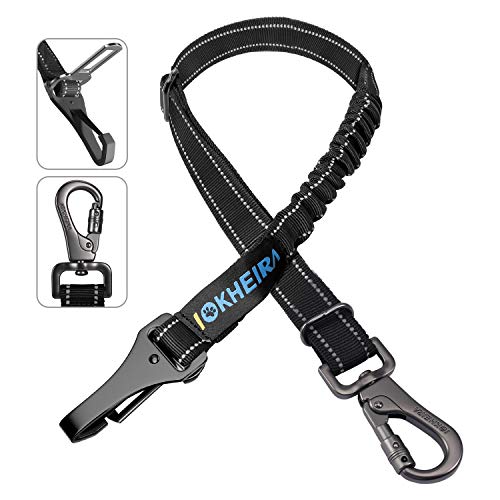
Not all tethers are created equal, and the length of the connecting strap is a major factor in safety. Long, bungee-style leashes that allow a dog to swing or lunge forward are dangerous. In a collision, the momentum generated by a swinging dog can cause them to be thrown against the seat or dashboard. You want a tether that is short enough to prevent your dog from falling into the footwell or being thrown forward, but long enough to allow them to sit, stand, and lie down comfortably.
Material matters just as much as length. Look for tethers made from high-strength nylon webbing or reinforced steel cables with a protective sleeve. The stitching should be bar-tacked at stress points, meaning the thread is woven back and forth multiple times to prevent unraveling under tension. Avoid cheap, thin cords that may fray quickly, as these can snap under the sudden force of a stop.
Crash Testing and Safety Certifications
In the world of pet wellness, we often look for scientific backing, and this applies to car safety as well. While not every product on the market is rigorously tested, you should prioritize brands that publish results from independent crash tests. Organizations like the Center for Pet Safety (CPS) provide valuable data on which harnesses and tethers actually hold up under impact.
Look for products that explicitly state they are "crash tested" or "impact tested." These tests simulate real-world scenarios, measuring how much force is transferred to the dog and whether the equipment fails. While no product can guarantee survival in a high-speed crash, a certified restraint system significantly increases the odds of a non-fatal outcome and reduces the severity of injuries. It is an investment in your dog’s life that pays for itself in peace of mind.
Fitting for Comfort and Anxiety
Safety is useless if your dog refuses to wear the equipment. For anxious pets or those who are sensitive to touch, the fit of the harness and the feel of the tether are crucial. A tether that is too heavy or has loud, clunky clips can increase stress levels, making the car ride unpleasant. Look for lightweight, quiet clips and soft, breathable materials for the harness.
Proper fitting is also about preventing chafing. During long drives, a poorly fitted harness can rub against the armpits or neck, causing hot spots or irritation. Measure your dog’s girth and neck size carefully, and adjust the straps so you can fit two fingers underneath. This ensures the harness is secure without being restrictive. For senior dogs or those with mobility issues, a harness with a handle on the back can help you assist them in and out of the car, reducing strain on their joints.
Maintenance and Inspection
Just like any other piece of veterinary or wellness equipment, your dog’s seat belt tether requires regular maintenance. Dirt, sand, and debris can get caught in the stitching or the clip mechanism, weakening the material over time. Clean your tether and harness according to the manufacturer’s instructions, usually with mild soap and water, and allow them to air dry completely before storing.
Before every trip, perform a quick visual and tactile inspection. Look for frayed webbing, loose threads, or rust on the metal clips. Check the stitching at the attachment points for any signs of pulling or separation. If you notice any damage, replace the item immediately. Do not attempt to repair a compromised tether with tape or knots; it is not worth the risk to your pet’s safety.
Frequently Asked Questions
Can I use my dog’s regular leash as a seat belt?
No, regular leashes are not designed for crash safety. They are often too long, allowing your dog to become a projectile, and the clips may not be strong enough to withstand sudden force. Always use a dedicated, crash-tested tether.
Is it safe to let my dog ride in the back seat?
Yes, the back seat is generally safer than the front, especially if airbags are deployed. However, your dog must still be restrained. An unrestrained dog in the back seat can still be thrown forward with great force, injuring themselves or the driver.
What if my dog is too small for a harness?
Even small dogs need restraint. Look for lightweight, mini-harnesses designed for travel. For very small dogs, a carrier that is strapped into the seat belt is also a safe option, provided the carrier itself is crash-tested.
How do I clean my dog’s seat belt tether?
Most tethers can be hand-washed with mild soap and water. Avoid using bleach or harsh chemicals that might degrade the nylon or metal. Always air dry completely to prevent rust or mold growth.
Can I use a seat belt extender for my large dog?
Extenders are generally not recommended as they can add slack and increase the risk of injury. Instead, choose a tether that is appropriately long for your dog’s size and the vehicle’s interior. If your dog is very large, consider a dedicated anchor point in the trunk or cargo area.
Conclusion
Choosing the right dog seat belt tether is a simple yet profound way to show your love and commitment to your pet’s safety. By prioritizing crash-tested harnesses, appropriate tether lengths, and regular maintenance, you create a secure environment for your furry companion. Remember, while natural wellness and nutrition support your dog’s health at home, physical safety on the road is the foundation that allows them to enjoy every adventure with you. Start by measuring your dog today and upgrading their restraint system to ensure every journey is a safe one.


