Best Spring Heartworm Prevention: Trifexis vs Interceptor Guide
Table of Contents
Trifexis vs Interceptor for Spring Heartworm Prevention in Dogs
Spring brings warming temperatures, longer walks, and unfortunately, a surge in heartworm risk for our beloved dogs. As a holistic veterinarian, I see concerned pet parents asking the same question every March and April: "Which heartworm prevention is right for my dog?" Two medications consistently appear in these conversations—Trifexis and Interceptor—and understanding their differences can help you make an informed choice that aligns with your dog's individual health profile and your family's wellness priorities.
This comparison cuts through marketing language to examine what veterinary experts actually know about these medications, their ingredients, how they work, and who benefits most from each option. Whether you have a senior dog, a puppy entering heartworm season for the first time, a traveling companion, or a dog with sensitivities, you'll find practical guidance here to support your veterinary team's recommendations.
Quick Verdict
Choose Trifexis if...
- Your dog needs heartworm, flea, and intestinal parasite protection in one dose
- You prefer a monthly oral tablet administered at home
- Your dog handles combination treatments well without sensitivities
- You want broader parasite coverage beyond just heartworms
Choose Interceptor if...
- Your dog needs heartworm prevention only, without flea treatment
- You prefer a simpler single-action medication (lower ingredient load)
- Your dog has a history of sensitivity to spinosad (found in Trifexis)
- Cost is a primary concern and you use separate flea prevention
| Factor | Trifexis | Interceptor |
|---|---|---|
| Active Ingredients | Spinosad (fleas), milbemycin oxime (heartworms, roundworms, hookworms, whipworms) | Milbemycin oxime (heartworms, roundworms, hookworms, whipworms only) |
| Primary Purpose | Heartworm + flea + intestinal parasite prevention & treatment | Heartworm + intestinal parasite prevention only |
| Dosing Schedule | Monthly oral tablet | Monthly oral tablet |
| Best For | Dogs needing multi-parasite coverage; indoor/outdoor dogs with flea exposure | Dogs requiring heartworm-only prevention; those using separate flea products |
| Key Advantage | All-in-one solution reduces pill burden; spinosad kills adult fleas quickly | Simpler formulation; lower ingredient load; separate flea control flexibility |
| Main Consideration | Spinosad may cause sensitivity in some dogs; not for dogs under 5 lbs or under 4 weeks old | No flea coverage; requires separate flea prevention product for full protection |
About Trifexis
Trifexis represents what many veterinarians call the "convenience approach" to parasite prevention. This monthly oral tablet combines two active ingredients—spinosad and milbemycin oxime—to address heartworms, fleas, and intestinal parasites in a single dose. For pet parents managing multiple medications, this integration appeals to busy schedules and reduces the psychological weight of "pill day" in many households.
Spinosad, derived from fermentation of soil bacteria, works on the flea's nervous system to cause rapid paralysis and death. It kills adult fleas within 30 minutes of ingestion, which can be particularly valuable during spring and summer when flea infestations spike. The milbemycin oxime component provides heartworm prevention plus protection against roundworms, hookworms, and whipworms. From a practical standpoint, I've observed that many dog parents appreciate not coordinating separate flea and heartworm timelines.
About Interceptor
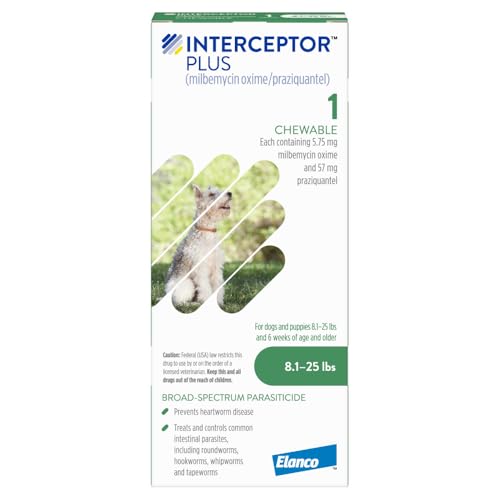
Interceptor takes what I call the "focused prevention" approach. This monthly tablet contains milbemycin oxime only, providing heartworm prevention plus protection against roundworms, hookworms, and whipworms—but no flea treatment. For many pet parents, this simplicity appeals to those who prefer a lower ingredient load or who use prescription flea products separately (like Comfortis, NexGard, or Simparica). Interceptor has a long track record of safety and efficacy dating back decades, which provides reassurance for conservative pet parents or those managing dogs with a history of medication sensitivity.
The milbemycin oxime in Interceptor prevents heartworm by interfering with the parasite's nervous system, with effectiveness rates exceeding 99% when used as directed. It's particularly favored by veterinarians managing geriatric dogs, puppies in their first season of prevention, or dogs whose flea prevention is already handled through separate channels. The straightforward ingredient profile also appeals to pet parents seeking transparency—you know exactly what your dog is receiving and for what purpose.
Head-to-Head: Ingredient Complexity and Safety Profile
Trifexis contains spinosad, an ingredient derived from naturally occurring soil bacteria that has been used in agriculture for decades. However, "natural origin" doesn't automatically mean it's ideal for every dog. Some dogs experience mild side effects with spinosad, including vomiting, decreased appetite, or lethargy—typically within a few hours of administration. These reactions are uncommon but noteworthy for dogs with known sensitivities to macrocyclic lactones or those with a history of gastrointestinal upset. Additionally, Trifexis is not approved for dogs weighing less than 5 pounds or puppies under 4 weeks old, which limits its use for small breed or young dog populations.
Interceptor's milbemycin oxime stands alone as a simpler formulation, which some veterinarians and pet parents interpret as "fewer variables to react to." For dogs with a documented history of medication sensitivity or those managed by holistically-minded owners, this distinction matters. The ingredient profile is lower-burden, and milbemycin oxime has an extensive safety record across decades of veterinary use. That said, any medication carries inherent risks, and milbemycin oxime is not appropriate for dogs with certain genetic predispositions (certain MDR1 mutations in herding breeds), which is why pre-treatment screening through your veterinarian remains essential regardless of which product you choose.
Head-to-Head: Coverage and Parasite Protection
Trifexis provides three-in-one coverage: heartworm prevention, flea control, and intestinal parasite protection (roundworms, hookworms, whipworms). For a dog spending time outdoors, playing in parks, or living in a multi-pet household, this broader spectrum appeals to pet parents seeking comprehensive protection. The spinosad component also treats active flea infestations, not just prevents them—a distinction that matters if your dog develops fleas before the prevention kicks in or if you live in a high-flea environment. In my clinical experience, the rapid flea-killing action (within 30 minutes) provides noticeable relief for dogs scratching intensely.
Interceptor provides heartworm prevention plus intestinal parasite protection but does not address fleas. This means you must coordinate a separate flea prevention product—which isn't necessarily a drawback. Many veterinarians actually prefer this approach because it allows customization: you can choose a flea product that aligns with your dog's individual needs, your climate, and your preference for oral, topical, or collar-based solutions. If your dog rarely encounters fleas or lives in a region with minimal flea pressure, Interceptor alone may be completely adequate. The streamlined focus also simplifies troubleshooting if your dog experiences any reaction—you know precisely which ingredient is responsible.
Head-to-Head: Dosing, Compliance, and Practicality
Both Trifexis and Interceptor are administered as monthly oral tablets, which means compliance depends largely on your ability to remember a date each month and your dog's willingness to swallow a tablet. Trifexis is offered in multiple sizes (Trifexis for small dogs, Trifexis for large dogs), requiring proper weight-based selection. Interceptor similarly comes in size-specific formulations. Both should be given with food to enhance absorption and reduce gastrointestinal upset. For pet parents with multiple dogs, consistent scheduling becomes critical—mixing up which dog receives which medication could compromise protection or cause inappropriate dosing.
From a practical standpoint, I've found that dogs taking monthly tablets build routine acceptance over time. Some pet parents wrap the tablet in a small amount of wet food, cream cheese, or a pill pocket; others place it directly in the back of the throat. The key variable isn't the medication itself but your confidence in administering it consistently. For travel-heavy households, setting phone reminders on your phone or tablet ensures you don't miss a dose while on the road during spring or summer—critical times when heartworm risk is highest due to mosquito activity.

Interceptor for Spring Heartworm Prevention in Dogs According to Veterinary Experts

See Also
Frequently Asked Questions
How do I choose between Trifexis and Interceptor for spring heartworm prevention?
To choose the right product, compare the active ingredients and dosage forms; Trifexis combines milbemycin oxime with praziquantel for fleas, while Interceptor contains only milbemycin oxime. Consult your veterinarian to determine if your dog needs dual protection against fleas or just heartworms before selecting a specific brand.
Is it worth paying more for Trifexis compared to Interceptor?
Whether Trifexis is worth the higher price depends on whether your dog requires flea control in addition to heartworm prevention. If fleas are a concern, Trifexis offers combined protection, but if you use a separate flea treatment, Interceptor may be the more cost-effective option for heartworm prevention alone.
What is the best time of year to start spring heartworm prevention?
The best time to start prevention is as soon as local temperatures consistently rise above 57°F (14°C), which typically occurs in late March or early April depending on your region. Starting early ensures continuous protection before mosquitoes become active and transmit heartworm larvae.
How do I choose the correct dosage for my dog's Trifexis or Interceptor?
Select the chewable tablet size that matches your dog's weight range as indicated on the packaging, ensuring they are within the approved limits for each product. Always verify the specific weight bracket with your veterinarian to avoid under-dosing or overdosing your pet.
How do I administer Trifexis and Interceptor if my dog refuses chewables?
Both products are designed as chewable tablets that can be given whole, but you can hide them in a small amount of soft food like peanut butter or wet kibble if your dog resists. Ensure the food does not cover the tablet completely so the dog swallows it without chewing on the coating excessively.
What is the difference in price range between Trifexis and Interceptor?
Trifexis generally falls into a higher price range due to its dual-action formula protecting against both heartworms and fleas, whereas Interceptor is priced lower as it targets only heartworms. Budget-conscious owners might opt for Interceptor if they already manage flea control separately.
How do I know if my dog has been exposed to heartworms in the spring?
You cannot determine exposure just by symptoms, as heartworm disease often shows no signs until advanced stages; a simple blood test is required for diagnosis. Veterinarians recommend annual testing and year-round prevention rather than waiting for symptoms to appear after spring exposure.